

Goundo Gueye
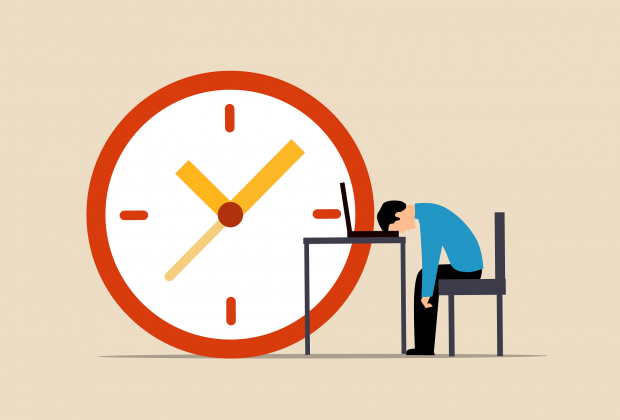
It’s 11:52 p.m. and the paper is due at midnight. A student is staring at their laptop, typing fast, stressed, and hoping the Wi-Fi doesn’t crash. They had a whole week to finish the assignment. They knew it was important. They knew it would affect their grades. But somehow, they still waited until the last minute.
This is not rare in college. Research by the American Psychological Association shows that about 80–95% of college students say they procrastinate. So even though students know procrastination can hurt their grades, most of them still do it. Many people think procrastination just means being lazy, but it is usually more than that.
According to S. Sperling, procrastination is often connected to stress, fear, pressure, and emotions.
Maya Johnson, a second-year student at CCBC, said she procrastinates almost every week. “I always tell myself I’ll start early,” she said. “But then I get distracted or I just don’t feel ready.” She explains that sometimes assignments feel so big that she avoids them. “If it feels overwhelming, I just ignore it.”
Daniel Reyes, a first-year student majoring in business, said something similar. “When I see a lot of work due at the same time, I freeze,” he said. “Instead of starting one thing, I end up doing nothing.”
According to Dr. Tim Pychyl, procrastination is not really about time management. It is more about emotions. He explains that people procrastinate to avoid negative feelings like anxiety, boredom, or self-doubt. Doing something easier or more fun feels better at the moment. But later, the stress comes back stronger.
Students agree with that idea. “Even when I’m not doing my work, I’m thinking about it,” Johnson said. “So, I’m not even relaxing. I’m just stressed the whole time.”
Fear of failure is another big reason students procrastinate. Research by P. Steel in Psychology Today shows that procrastination is strongly connected to anxiety and perfectionism. Some students avoid starting because they are scared they won’t do well.
Aisha Thompson, a first-year psychology major, says perfectionism affects her a lot. “If I don’t think I can do it perfectly, I don’t want to start,” she said. “It sounds dramatic, but I’d rather not try then try and fail.”
College students often feel pressure to keep scholarships, make their families proud, or compete for internships. That pressure can make assignments feel scary instead of motivating.
Professor Laura Mitchell, who teaches sociology at Towson University, said she sees this often. “Students think procrastination means they don’t care but sometimes they care so much that they’re afraid to mess up.”
Research by Penn State also shows that students who procrastinate a lot tend to have lower grades and higher stress levels. Even if procrastination works once or twice, it usually leads to more anxiety over time.
According to Digital Technology: A Source of Procrastination, technology makes procrastination even easier. Phones are always nearby. Social media is designed to keep people scrolling.
“I’ll sit down to study and pick up my phone without even realizing it,” Reyes said. “I tell myself it’s five minutes, but it’s never five minutes.”
The American Psychological Association explains that multitasking and digital distractions can lower productivity and increase stress. Even when students know this, it is hard to put the phone away.
The effects of procrastination go beyond just grades. Research by A. Norton links chronic procrastination to higher stress, more anxiety, and sleep problems.
“During finals week, I barely sleep,” Johnson said. “I leave everything for the last minute and then I’m exhausted.”
When students stay up late finishing work, they are more tired in class and less focused. Over time, procrastination can also hurt their confidence. Students may start thinking they are lazy or bad at school, even if that is not true.
“Sometimes I feel like I just don’t have my life together,” Reyes admits. “But I know I could do better.”
One confusing thing about procrastination is that students know it is bad. They know it causes stress. They know it hurts their grades. But in the moment, avoiding the work feels easier than starting it. As Pychyl said, people are wired to care more about how they feel right now than about future consequences.
Procrastination is not impossible to fix. Professor Mitchell suggests breaking assignments into smaller parts. “Don’t think about writing ten pages,” she said. “Think about writing one paragraph.”
Research by K. Boogaard supports this idea. Breaking tasks into smaller goals can improve motivation and productivity. When assignments feel smaller, they are less scary.
Some students also try studying in the library instead of their house to avoid distractions. Others use timers or turn their phone off.
“I tell myself I only have to work for twenty minutes,” Johnson said. “Once I start, it’s not as bad as I thought.”
Procrastination is something most college students deal with at some point. It is not just about laziness. Understanding that can help students stop being so hard on themselves and start building better habits.
The real challenge is making a change before the next deadline shows up.